some of our rarest scents are also our softest. here's why.
strength and quality are two different things
- the common belief: a scent you can smell from the front door must be better made
- the reality: strength mostly tells you how easily your nose picks up certain molecules
- same oil, different volume: our delicate scents are the same 100% pure oil as our strongest
- rated for you: every kirri scent has a strength rating out of 5, so you can choose by room
how your nose reads a scent
- puzzle pieces: each scent molecule has a shape, and your nose has around 400 types of receptor
- different fits: some pieces click in instantly, others fit loosely, so you need far more of them
- a pattern, not a note: your brain reads the whole pattern of receptors as fig, or fresh linen
- everyone's puzzle differs: some people can't detect certain musks at all, while others find them loud
why citrus needs so much more
- a loose fit: bright citrus molecules are harder for the nose to grab hold of
- quick to fade: they're light, so they lift off and disappear first
- more in the bottle: perfumers use much larger amounts so citrus reads clearly
- the other end: some woody and musky materials register in tiny traces and linger for hours
delicate doesn't mean diluted
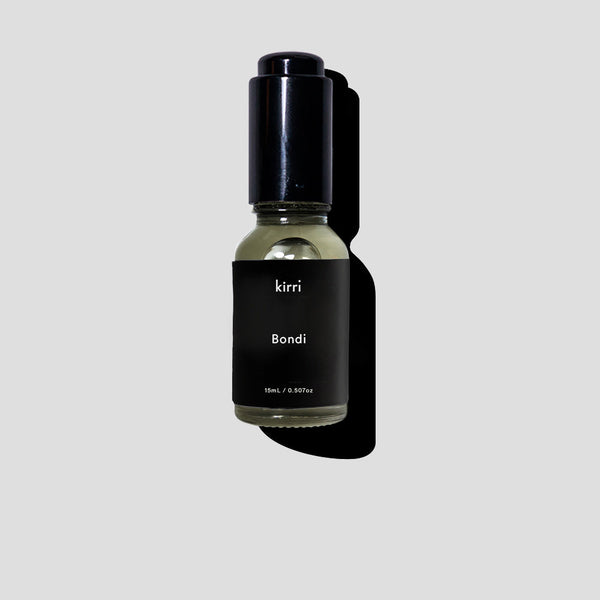
- bondi: our most delicate scent, rated 1 out of 5 for strength
- one of a kind: its key ingredient is a captive molecule no other perfume can use
- used with precision: rare materials often go in small, exact amounts, and some are soft by nature
- nose blindness: you stop noticing any scent you live with, even when it's still in the room
where quality really comes from
- purity: clean, well-made materials smell truer and hold their shape as they fade
- rarity: some molecules are captives, owned by one fragrance house and off limits to others
- the palette: a perfumer can spend a career gaining access to materials few others can buy
- the hand: the perfumer decides how those materials meet, and that's where a scent comes alive
captives, explained
- what they are: a molecule discovered or created by one house, kept for its own scents
- why it matters: a captive gives a scent a signature that can't be copied note for note
- where bondi began: a fresh smell from swiss glacier ice led rené morgenthaler to a green algae
- from ice to oil: that discovery became the captive molecule at the heart of bondi (read the full story)
the perfumer's palette
- built over a lifetime: a palette is the library of materials a perfumer can actually reach for
- rené morgenthaler: a swiss master perfumer, born in geneva, who creates our home fragrance oils
- barrie dean: an australian master perfumer, regarded as a global authority on fragrance materials
- why it shows: a rarer palette reaches notes other scents simply can't
the mona lisa isn't famous for its paint
- not the paint: nobody stands in front of it admiring the quality of the pigment
- the arrangement: it's how that paint was put together, layer on careful layer
- the meaning: it tells a story people still respond to, five centuries later
- fragrance is the same: identical materials in different hands make a completely different scent
choose by room, not by assumption
- small rooms: bedrooms, bathrooms and studies suit a delicate scent
- open spaces: living areas and open-plan homes can carry something stronger
- smart diffusers: start on delicate and let it build (why your diffuser runs all day on low)
- not sure yet: the discovery kit has a 2ml sample of each iconic scent
quiet scents often carry the rarest stories.
more guides: all scent guides
photo: federico scarionati on unsplash